With the British season only a few weeks away, we thought it was the right time for a guide for first-timers. Polo is easier to enjoy than it looks, and a few basic ideas will take you a long way.
The basics
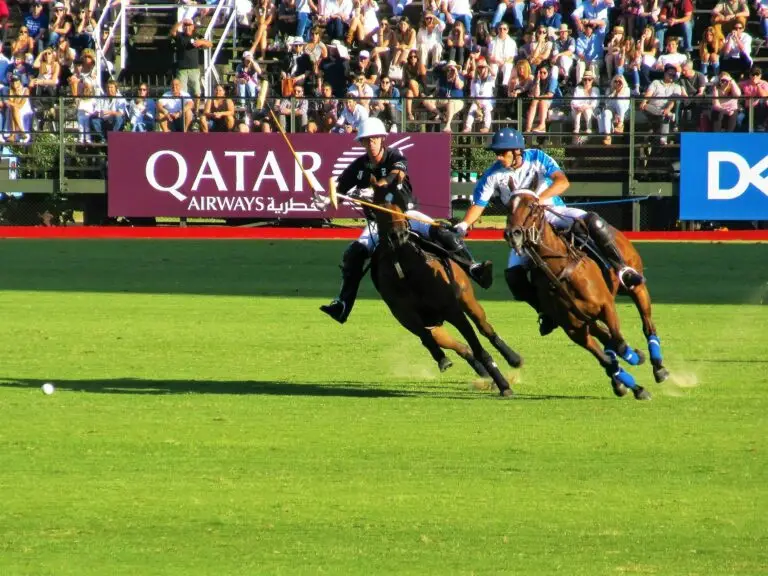
An outdoor polo team has four players, numbered 1 to 4. Number 1 is usually the most attacking player and number 4 is generally the back, who defends. Number 3 is often the playmaker and team captain on the field, distributing the ball. The game is played on a grass field about 300 yards long, and it is divided into periods called chukkas. A match usually has four to six chukkas of roughly seven minutes each, with a short break between them so the players can change ponies.
The line of the ball
The key to the rules is the line of the ball. Every time the ball is hit, it creates an imaginary line along its path, and the player who hit it has the right of way along that line. Another player can challenge by riding alongside, a move called riding off, but they must not cross in front of the rider in possession in a dangerous way. A bump has to be made at a shallow angle, below 45 degrees.
Most of the whistles you will hear are for crossing the line, and the umpires, mounted on the field, award penalties of different values depending on where the foul takes place.
Half-time and ponies
Spectators are encouraged to walk onto the field at half-time and tread the divots back into the turf. It is a great tradition, and it gives you a chance to see the surface up close and often to chat with friends. The ponies are the real athletes of the sport. Most polo players ride several in a match, and a good pony is as valuable as the rider.
How to follow a match
- Check the handicaps first, since they tell you which team is expected to win and by how much.
- Watch the number 3 for the shape of the game.
- Listen for the umpire’s whistle and look for the penalty spot.
- Stay near the boards for the sound and the speed of the ponies.
Polo is a sport best seen live. A good seat by the touchline at Guards Polo Club or Cowdray will tell you more about the game than any guide can. Our advice is to arrive early, bring a picnic and join the divot treading. Then, once you know the basics, the rest comes quickly.
Sources: Polo Plus 10, Polo 101, Gentleman’s Gazette, Polo for beginners